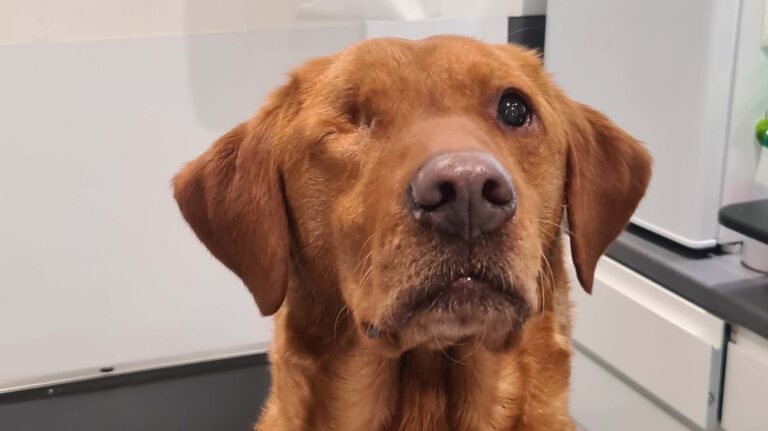
Progressive Retinal Atrophy (PRA) is a genetic eye condition in dogs that slowly damages the retina, the part of the eye responsible for vision. As the retina degenerates, dogs experience gradual vision loss, often starting with difficulty seeing at night. Over time, this can progress to partial or complete blindness.
PRA is not painful, and many dogs adapt very well when supported properly. Although there is no cure, early diagnosis allows owners to prepare, adjust their dog’s environment, and maintain an excellent quality of life. Regular veterinary eye checks and responsible breeding practices play an important role in managing this condition.
Diagnosing PRA:
● Many diagnoses begin when owners notice early signs such as night blindness, struggling in dark areas, bumping into objects, or dilated pupils.
● Veterinary ophthalmologists examine the eyes using special instruments to detect changes in the retina that are typical of PRA.
● Electroretinography (ERG) This test measures how well the retina responds to light. ERG can detect PRA before visible signs appear, making it especially useful for early diagnosis and breeding screening.
● DNA tests can identify whether a dog is affected by PRA, is a carrier, or is clear of the condition. These tests are essential for early detection and for preventing PRA through responsible breeding.
Early diagnosis does not change the outcome of vision loss, but it gives owners time to prepare, adapt their dog’s surroundings, and learn how to support a blind or visually impaired dog.
Living with a blind dog is often easier than owners expect. Dogs rely heavily on smell, hearing, and memory, and with a little guidance they quickly learn how to navigate their world. Keeping furniture, food bowls, and beds in the same place helps your dog build a mental map of the home. Speaking to your dog before touching them and using a calm voice provides reassurance and direction.
Safety is important, so blocking stairs or dangerous areas and using a harness halo or bumper harness (like Muffin’s Halo) can prevent accidents while your dog gains confidence.
Retinal support supplements like Ocu-GLO may be beneficial to slow down retinal degeneration and can help slow the development of cataracts. Cataracts can form in dogs (with PRA) as a result of toxins released by the degenerating retina called “free radicals” which damage the lens. These supplements can help reduce the toxins accumulating.
There are echo-location devices now available such as Echo-Blinddog which work by creating a high pitched sound which the dog can hear as an echo and this can help dogs to navigate. This only works for dogs with good hearing. You can check out their facebook page for customer testimonials.
Daily routines are especially comforting for blind dogs. Feeding, walks, and playtime at consistent times help them feel secure and relaxed. Encouraging gentle exploration, offering praise, and rewarding confident behavior builds trust and independence.
Other things that can help:
- Scent Mapping: Apply different safe scents (e.g., vanilla, lavender) on doors or furniture to create a “scent map” for your dog.
- Tactile Flooring: Place rugs, textured mats, or runners to guide your dog between rooms or to signal high-risk areas like stairways.
- Ultrasonic/Sound Beacons: Place sound-emitting devices, such as water fountains, at water or food bowls to help your dog locate them via hearing.
- Soft Bumpers: Use foam padding or soft blankets on sharp corners of furniture.
- Keep Layout Consistent: Avoid moving furniture, as blind dogs rely on a fixed mental map
Blindness caused by PRA does not mean a dog cannot enjoy life. With love, structure, and understanding, blind dogs remain playful, affectionate, and deeply connected to their families.