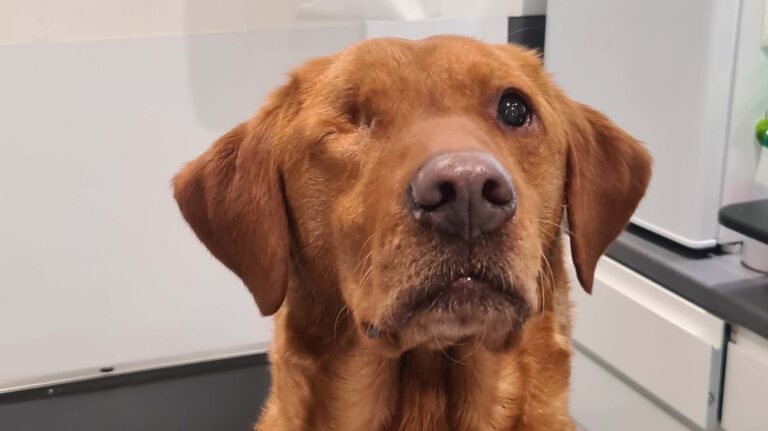
Sudden changes to your dog’s vision can be distressing, especially when they seem to happen overnight. One of the most common causes of sudden and irreversible vision loss in otherwise healthy middle-aged dogs is a condition called SARDS, or Sudden Acquired Retinal Degeneration Syndrome.
At Eye Right Referrals, we understand how worrying this diagnosis can be — but with the right support and a few adjustments at home, most dogs continue to enjoy a happy and fulfilling life.
What Is SARDS?
SARDS is a condition that causes rapid and permanent vision loss due to the sudden failure of the retina — the light-sensitive tissue at the back of the eye that sends visual signals to the brain. Uniquely, SARDS often occurs without any obvious change in the appearance of the eye, which can make it all the more confusing for owners.
This condition typically affects middle-aged, small to medium-sized dogs, though it can occur in any breed. It is not associated with pain, inflammation, or infection.
What Causes SARDS?
The exact cause of SARDS remains unknown, although research is ongoing. It is thought to be linked to sudden degeneration of the photoreceptor cells in the retina. There is currently no known cure or preventative treatment.
Some dogs with SARDS show signs that may suggest a hormonal imbalance (such as excessive hunger, thirst, or urination), but the link between these symptoms and retinal damage is not yet fully understood.
What Are the Signs?
Dogs with SARDS may suddenly begin to:
- Bump into furniture or doorways
- Hesitate to go up or down stairs
- Seem disoriented, especially in new environments
- Struggle to see in low light or darkness
- Appear startled more easily
- Have dilated pupils that don’t respond normally to light
In some cases, these signs appear quite suddenly — often over just a few days — and may be more noticeable at home than during a vet visit.
How Is It Diagnosed?
A full veterinary ophthalmic examination is needed to assess your dog’s eye health. In most cases of SARDS, the retina and optic nerve look completely normal, and the pupils may still respond faintly to light.
To confirm the diagnosis, we perform an electroretinogram (ERG) — a non-invasive and pain-free test that measures how well the retina responds to light. In dogs with SARDS, this response is absent.
An ERG is the gold standard diagnostic test for confirming SARDS and ruling out other treatable causes of sudden vision loss, such as optic neuritis or retinal detachment.
Is There Any Treatment?
Sadly, there is no treatment available to reverse the retinal damage caused by SARDS. However, it’s important to know that blind dogs can lead wonderful lives with a little extra support and patience from their families.
Living with a Blind Dog
Dogs rely far more on their sense of smell and hearing than we often realise. With time, most dogs adapt incredibly well to their vision loss, especially when their environment and routines are kept consistent.
Here are a few ways you can help your dog adjust:
- Avoid rearranging furniture to make navigation easier
- Use baby gates around stairs until your dog learns their layout
- Use scent cues (like essential oils or safe herbal sachets) to mark doorways or favourite areas
- Talk to your dog before touching or approaching them
- Use toys that make noise or have strong scents for enrichment
- Keep outdoor walks on-lead unless in a secure area
We’re always happy to offer tailored advice on adapting your home and supporting your dog during this transition.
Final Thoughts
SARDS is an emotional diagnosis, but it’s important to remember that it does not mean the end of a good quality of life. Most dogs continue to enjoy their daily routines, playtime, and companionship just as much as before.
If your dog is showing signs of sudden vision loss or you’d like to learn more about SARDS, please don’t hesitate to contact us. At Eye Right Referrals, we’re here to support both you and your pet every step of the way.