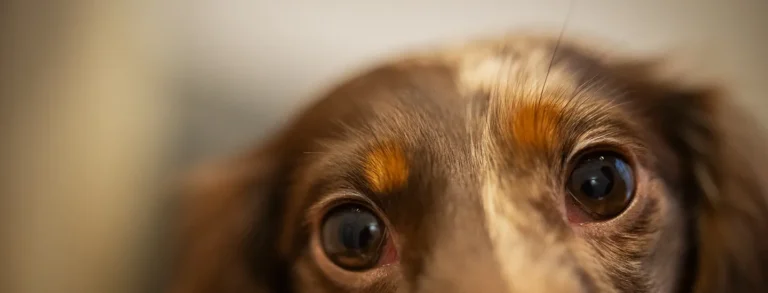
Eye discomfort in dogs can be concerning, particularly when symptoms persist or recur without an obvious cause. Distichiasis is a condition in which extra eyelashes grow from abnormal locations along the eyelid margin, where they can rub against the surface of the eye and cause irritation.
At Eye Right Referrals, we understand how uncomfortable this condition can be for dogs and how worrying it can be for their owners. With proper diagnosis and management, most dogs can be kept comfortable and free from ongoing eye problems.
What Is Distichiasis?
Distichiasis occurs when additional eyelashes grow from the openings of the meibomian glands along the eyelid margin. These hairs may come into contact with the cornea or conjunctiva, leading to irritation.
Distichiae can be present in one or both eyes and may vary in number, thickness, and direction of growth. Some dogs show no discomfort, while others develop significant clinical signs.
What Causes Distichiasis?
Distichiasis is usually a congenital condition, meaning dogs are born with it, although signs may not appear until later in life. Certain breeds are more commonly affected.
When the abnormal lashes rub against the eye, they can cause chronic irritation, inflammation, or in some cases corneal ulcers, especially if the lashes are stiff or numerous.
What Are the Signs?
Dogs with distichiasis may show:
● Excessive blinking or squinting
● Redness of the eye
● Increased tearing or discharge
● Rubbing or pawing at the eyes
● Sensitivity to light
● Recurrent or non-healing corneal ulcers in more severe cases
How Is It Diagnosed?
Diagnosis is made through a careful ophthalmic examination, often using magnification and illumination to identify the abnormal lashes along the eyelid margin.
Because the lashes can be very fine, they may be missed during a routine examination, making an ophthalmology assessment important in dogs with unexplained or recurrent eye discomfort.
Is There Any Treatment?
Treatment depends on the severity of the condition and the level of discomfort. At our clinic, cryotherapy is the treatment option most commonly used for managing clinically significant distichiasis.
Cryotherapy involves carefully applying controlled freezing to the affected eyelid margin in order to destroy the hair follicles responsible for the abnormal eyelashes. This helps prevent regrowth and reduces ongoing irritation to the surface of the eye. The procedure is performed under appropriate sedation or general anaesthesia to ensure your dog’s comfort.
Following cryotherapy, mild eyelid swelling and irritation are expected during the initial healing period. Most dogs recover well within approximately two weeks, with eye comfort improving as the eyelids heal.
It is important to note that while the follicles are destroyed during treatment, existing hairs may persist and gradually fall out over up to four weeks. During this time, supportive eye drops may be prescribed to keep the eye comfortable and protected.
Overall success rates are 83%, with only the occassional patient requiring a repeat procedure. Out of 100 hairs, only 17 of these are likely to grow back. Usually the hairs that do grow back are finer and less likely to cause an issue after cryotherapy.
Typically a second procedure is performed in a more aggressive way and so recurrence after this is rare.
Final Thoughts
While distichiasis can be a lifelong condition, it is very manageable in most dogs. With the right treatment and monitoring, affected dogs can remain comfortable and enjoy an excellent quality of life.
If your dog is showing signs of ongoing eye irritation or recurrent corneal problems, please don’t hesitate to contact us. At Eye Right Referrals, we are here to support you and your dog every step of the way.