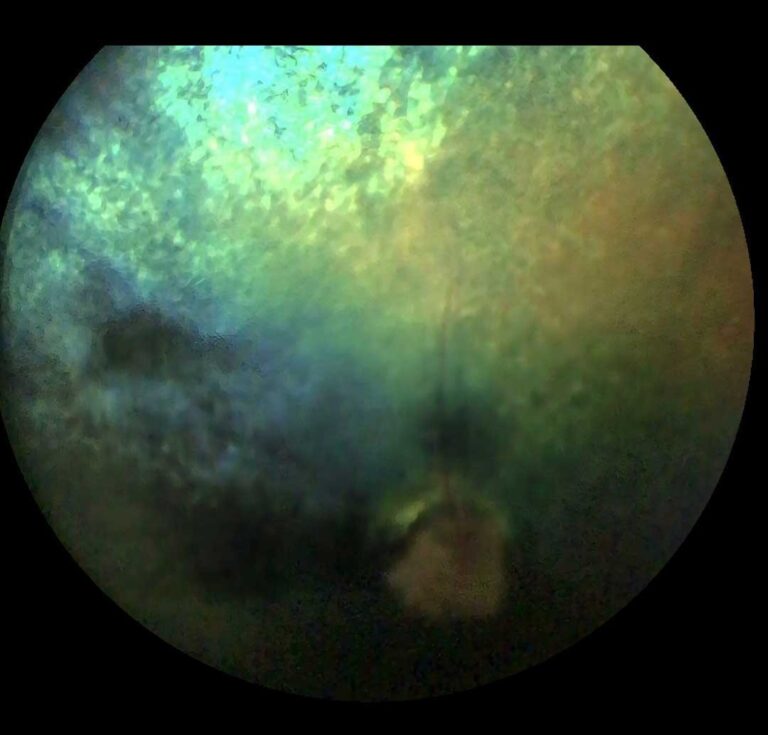
Sudden or persistent eye discomfort in your dog can be worrying, especially when an eye injury does not heal as expected. One reason this can happen is SCCED (Spontaneous Chronic Corneal Epithelial Defect), a condition where the surface layer of the cornea does not heal properly, leading to a persistent corneal ulcer in an otherwise healthy eye.
At Eye Right Referrals, we understand how frustrating and concerning this condition can be. The good news is that with appropriate treatment and care, most dogs make an excellent recovery and regain full comfort.
What Is SCCED?
SCCED is a condition in which the outer layer of the cornea (the epithelium) fails to properly attach to the underlying tissue, preventing normal healing. This results in a persistent corneal ulcer that may appear mild but does not heal despite standard treatment.
SCCEDs are most commonly seen in middle aged to older dogs, particularly certain breeds, although any dog can be affected. The condition is not caused by infection and is not the result of poor care.
What Causes SCCED?
The exact cause of SCCED is not fully understood. However, it is believed to be associated with an abnormality in the superficial corneal stroma that interferes with normal epithelial healing.
In dogs with SCCED, a hyaline (acellular) layer often forms on the surface of the corneal stroma. This abnormal layer prevents the corneal epithelial cells from properly adhering to the underlying tissue, resulting in weak attachment and delayed healing.
These ulcers frequently develop following minor trauma, such as rubbing the eye or a small scratch. While a typical corneal ulcer would heal uneventfully, the presence of this abnormal stromal surface means that the epithelium cannot securely reattach, causing the ulcer to persist.
In some cases, ongoing mechanical irritation can further prevent healing. Conditions such as ectopic cilia or distichiae may repeatedly traumatise the corneal surface, disrupting epithelial attachment and contributing to delayed or recurrent ulcers. Identifying and addressing these underlying causes is an important part of successful long-term management.
What Are the Signs?
Dogs with SCCED may show:
● Redness of the eye
● Excessive blinking or squinting
● Tearing or ocular discharge
● Rubbing or pawing at the eye
● Sensitivity to light
● A visible defect on the corneal surface
How Is It Diagnosed?
Diagnosis involves a thorough ophthalmic examination. A fluorescein stain test is used to highlight the corneal defect, which often shows a characteristic loose or undermined edge of epithelium.
Importantly, there is typically no infection or deep corneal damage, and the rest of the eye appears healthy. This helps distinguish SCCED from other types of corneal ulcers.
Is There Any Treatment?
Yes. While SCCEDs rarely heal with medical therapy alone, they respond very well to targeted in-clinic procedures aimed at restoring normal epithelial adhesion and promoting proper healing.
The three most commonly used treatment options are:
● Cotton bud debridement, where loose and non-adherent epithelial tissue is gently removed from the corneal surface. This helps expose healthier underlying tissue and encourages new epithelial growth.
● Diamond burr debridement, which involves polishing the superficial corneal stroma after epithelial removal. This technique helps eliminate the abnormal hyaline layer and creates a surface that allows the epithelium to reattach more securely. This generally has an 85% success rate.
● Superficial keratectomy, a surgical procedure used in selected cases, particularly recurrent or resistant SCCEDs. This technique removes the abnormal superficial stromal layer more definitively, providing an optimal surface for healing. This has a 99% success rate.
Following appropriate treatment and supportive topical medication, most SCCEDs heal within approximately two weeks, and recurrence is uncommon when the underlying corneal abnormality has been adequately addressed.
Caring for Your Dog During Recovery
During the healing period, your dog may need:
● An Elizabethan collar to prevent rubbing
● Regular application of prescribed eye drops
● Short-term activity restrictions
● Follow-up examinations to monitor healing
Our team will guide you through each step to ensure the best possible outcome.
Final Thoughts
Although SCCED can be frustrating, it is a highly treatable condition with an excellent prognosis. With timely intervention and proper care, most dogs return to full comfort and normal vision.
If your dog has a corneal ulcer that isn’t healing or you’re concerned about ongoing eye discomfort, please don’t hesitate to contact us. At Eye Right Referrals, we’re here to support both you and your dog every step of the way,